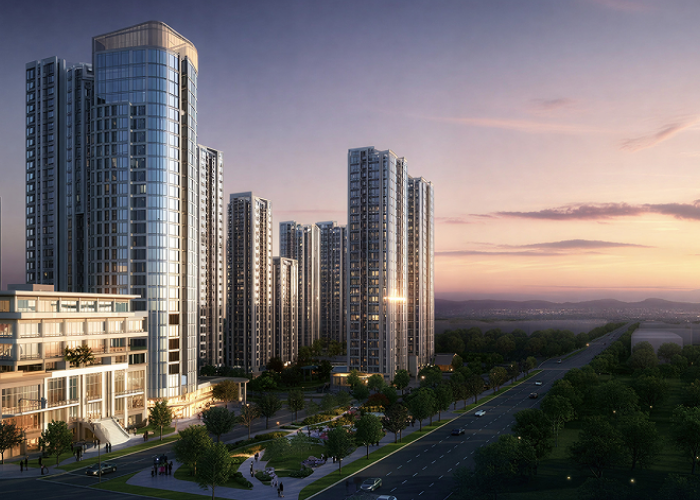
From Land to Lifestyle: Valuing Mixed-Use and Master-Planned Communities
Introduction
The way people live, work, shop, and socialize has changed dramatically over the past two decades. As a result, developers are increasingly moving away from single-purpose projects and toward integrated environments that combine residential, commercial, retail, hospitality, and recreational uses. These developments—often referred to as mixed-use or master-planned communities—have become some of the most sought-after real estate assets in modern markets.
Yet valuing these projects is far more complex than appraising a traditional office building, residential subdivision, or retail center. Successful Valuing Mixed-Use projects requires understanding not only the value of land and buildings but also the interconnected ecosystem that drives long-term demand and economic performance.
A thriving retail district can increase residential premiums. High-quality public spaces can improve occupancy rates. Future development phases may significantly influence current value. In other words, valuation extends beyond physical assets and into lifestyle creation.
This article explores how valuation professionals assess mixed-use and master-planned communities, the factors that influence value creation, and why developers, investors, and business owners must adopt a broader perspective when evaluating these increasingly important real estate assets.
Quick Takeaways
- Mixed-use communities derive value from multiple interconnected uses.
- Traditional valuation methods alone are often insufficient.
- Highest and Best Use analysis remains fundamental.
- Infrastructure and placemaking significantly influence value.
- Phased development requires forward-looking valuation models.
- Community amenities can generate measurable valuation premiums.
- Long-term demand drivers often matter more than current occupancy.
Understanding What Makes Mixed-Use Developments Different
Mixed-use developments combine multiple property types within a single project or district. These may include residential units, offices, retail centers, hotels, entertainment venues, healthcare facilities, and public spaces.
Unlike conventional projects, each component influences the performance of the others. A successful restaurant district can improve apartment rents, while a vibrant residential population supports local businesses.
The Power of Interdependent Land Uses
One of the defining characteristics of mixed-use valuation is understanding the relationship between various land uses.
Research and appraisal experts consistently note that commercial success can enhance residential values, while underperforming components can reduce overall asset performance.
Why Traditional Valuation Models Fall Short
Traditional valuation often examines asset classes independently. Mixed-use communities require a more integrated approach because income streams, occupancy levels, and market demand are interconnected.
For business owners and investors, this means evaluating the entire ecosystem rather than individual buildings.
Highest and Best Use: The Foundation of Valuation
Before assigning value, appraisers determine the property’s highest and best use.
The Four Tests of Highest and Best Use
A proposed use must be:
Legally Permissible
The project must comply with zoning regulations and planning policies.
Physically Possible
The site must support the intended development.
Financially Feasible
Projected returns must justify investment costs.
Maximally Productive
The use must generate the highest value among feasible alternatives.
Why It Matters for Mixed-Use Projects
Mixed-use sites often offer flexibility regarding residential, retail, office, and hospitality allocations. Determining the optimal mix directly influences valuation outcomes.
A key insight often overlooked by competitors is that the highest value may come from balancing uses rather than maximizing a single use category.
Moving Beyond Land Value
Many developers initially focus on land acquisition costs. However, land is only the starting point.
Infrastructure as a Value Multiplier
Roads, utilities, transit connectivity, and digital infrastructure all contribute to long-term value creation.
Master-planned communities frequently invest heavily in infrastructure before generating revenue, making valuation dependent on future performance rather than present conditions.
The Hidden Value of Public Realm Investments
Parks, plazas, trails, and community gathering spaces are increasingly recognized as economic assets rather than expenses.
These amenities improve walkability, increase dwell time, and support higher property values across multiple asset classes.
Valuing Multiple Income Streams
One of the greatest strengths of mixed-use projects is diversified revenue generation.
Residential Income
Apartments and condominiums provide recurring demand and stable occupancy.
Commercial and Office Income
Office tenants contribute long-term lease stability.
Retail and Hospitality Revenue
Retail, restaurants, and hotels can significantly increase overall project returns.
Income Diversification Premium
A unique valuation advantage emerges when multiple income streams reduce reliance on a single market segment.
This diversification often improves resilience during economic downturns.
The Role of Phased Development
Most master-planned communities are developed over several years or even decades.
Why Future Phases Matter Today
Current valuation must account for future development potential.
Industry experts note that value evolves continuously as additional phases are completed and market demand matures.
Discounting Future Benefits
Valuers use discounted cash flow models to estimate the present value of future revenues and infrastructure investments.
Managing Development Risk
Phased projects introduce uncertainty regarding timing, costs, and absorption rates.
Accurate valuation therefore requires scenario analysis and sensitivity testing.
Lifestyle as an Economic Asset
The strongest master-planned communities do not merely sell property—they sell experiences.
The Rise of Lifestyle Premiums
Modern buyers increasingly prioritize convenience, walkability, wellness, and social engagement.
Studies show strong consumer preference for communities where amenities, services, and public spaces are within walking distance.
Measuring Lifestyle Value
Valuers assess:
- Amenity quality
- Community programming
- Accessibility
- Public space activation
- Retail experience
These factors often contribute to rent and pricing premiums.
A Competitive Advantage Few Measure Properly
Many valuation models underestimate the monetary impact of community identity and placemaking.
Yet these elements frequently drive long-term demand more effectively than physical buildings alone.
Infrastructure, Sustainability, and Future Value
Sustainability is becoming a major valuation consideration.
ESG and Market Expectations
Investors increasingly evaluate:
- Energy efficiency
- Water management
- Mobility solutions
- Green building certifications
Long-Term Operational Benefits
Sustainable communities often experience lower operating costs and stronger tenant demand.
Future-Proofing Asset Value
Projects designed for changing demographic and environmental conditions may achieve stronger long-term performance.
Market Demand and Absorption Analysis
Valuation depends heavily on understanding future demand.
Demographic Trends
Population growth, income levels, and lifestyle preferences influence project success.
Absorption Rates
Valuers estimate how quickly units, offices, and retail spaces can be leased or sold.
Competitive Positioning
The best-performing projects offer differentiated experiences that competing developments cannot easily replicate.
Why Developers Need a Holistic Valuation Approach
Successful mixed-use valuation requires balancing financial analysis with urban planning, consumer behavior, infrastructure strategy, and placemaking.
Developers who focus exclusively on construction costs or land acquisition often overlook the broader factors that create sustainable value.
The most successful projects are those that function as integrated ecosystems where each component strengthens the performance of the others.
Conclusion
The future of real estate increasingly belongs to mixed-use and master-planned communities. These developments respond to changing consumer expectations by creating places where people can live, work, shop, and connect within a single integrated environment.
As a result, Valuing Mixed-Use assets has become significantly more sophisticated than traditional real estate appraisal. Today’s valuation professionals must evaluate land potential, infrastructure investments, income diversification, highest and best use scenarios, lifestyle amenities, sustainability initiatives, and future development phases.
For business owners, investors, and developers, understanding these dynamics is essential. A mixed-use community is not simply a collection of buildings; it is an interconnected economic system whose value emerges from the relationships between its components.
The projects that generate the greatest long-term returns are often those that invest strategically in placemaking, infrastructure, and community experience. By adopting a holistic valuation approach, stakeholders can make more informed decisions, identify hidden opportunities, and maximize the long-term performance of their developments.
As mixed-use communities continue reshaping urban and suburban landscapes worldwide, the ability to accurately assess their value will become an increasingly important competitive advantage.
FAQs
1. What is mixed-use property valuation?
Mixed-use property valuation is the process of assessing developments that combine residential, retail, office, hospitality, or other uses within a single project.
2. Why is highest and best use important?
Highest and best use analysis determines the legally permissible, financially feasible, and most productive use of a property, forming the foundation of valuation.
3. How are master-planned communities valued?
Valuers assess land value, infrastructure investment, future development phases, projected cash flows, market demand, and community amenities.
4. What is phased development valuation?
Phased development valuation estimates current value while accounting for future construction stages, infrastructure expansion, and projected revenue streams.
5. Do amenities increase property value?
Yes. Parks, retail districts, trails, recreational facilities, and public spaces often create measurable pricing and rental premiums within mixed-use communities.
References
- Global Valuation. “Understanding Master Planned Mixed-Use Subdivisions: Key Factors in Property Appraisals.“
- Cushman & Wakefield Core. “Master Plan Developments Valuation & Advisory.“
- Realquantum. “Appraising Mixed-Use Property.“